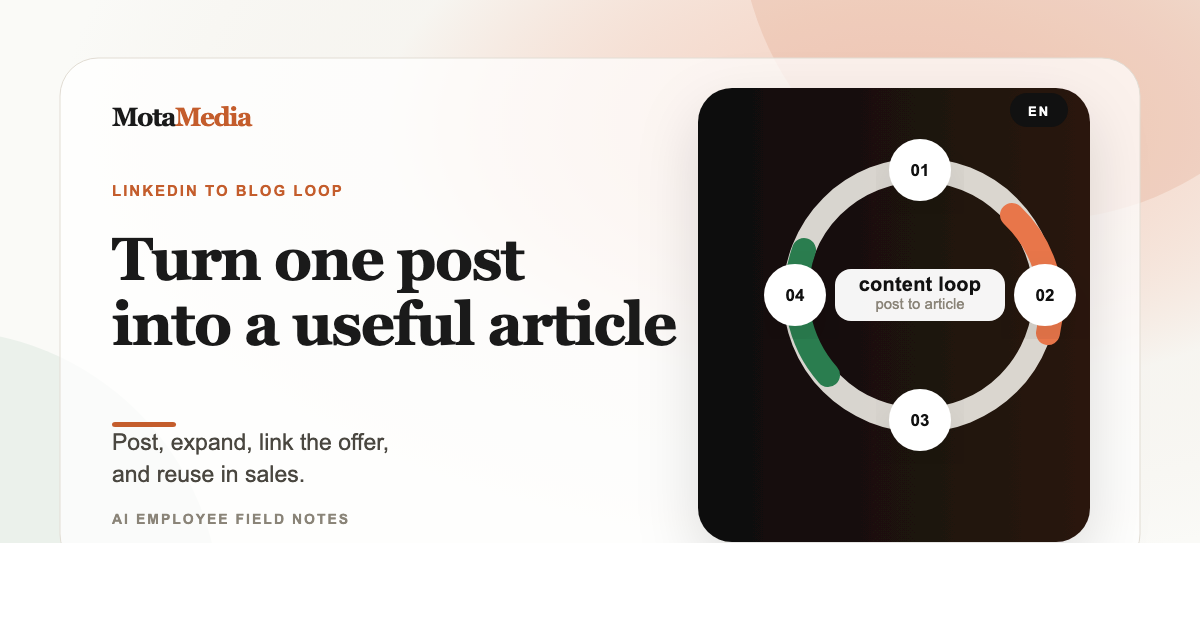
Start with one sharp LinkedIn idea, then expand it into a blog article with a clear answer, examples, internal links, and a CTA. The blog page gives the idea a permanent URL you can reuse in comments, sales calls, emails, and future posts.
Why this workflow works
LinkedIn is good for reach. Your website is good for ownership. The best content system uses both: the post earns attention, the article captures search intent, and the offer page turns qualified readers into conversations.
The workflow
- Capture the post: save the hook, core opinion, proof point, and comments.
- Extract the buyer question: ask what someone would type into Google or an AI search tool.
- Write the answer first: put the direct answer near the top of the article.
- Add examples: show workflows, approval points, risks, or before/after scenarios.
- Link the offer: connect the article back to the relevant service or consult page.
- Reuse the article: reply to comments, send it in DMs, and reference it in sales calls.
Recommended article structure
Use a repeatable format so your content agent can produce consistent pages:
- Headline based on a real buyer question.
- Short answer block for AEO.
- Context: why the question matters.
- Step-by-step process or decision framework.
- Risks, limits, and approval points.
- CTA back to the offer.
How the agent should help
Your content agent can watch for raw material: meeting transcripts, Slack conversations, client objections, workflow test results, and LinkedIn replies. Its job is to draft, not blindly publish. It should prepare the article and ask for approval before anything goes live.
A realistic cadence
Start with one article per week. That is enough to build a serious knowledge base without creating low-quality filler. Every article should answer a question your buyer might actually ask.
Want this loop running for your agency?
We can build the AI employee that turns transcripts, scripts, meetings, and client proof into LinkedIn posts and blog drafts.
Book a Free Consult →